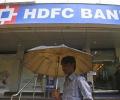
With the merger between HDFC Bank and HDFC Ltd complete, analysts said the next key monitorable for the Street would be successful resolution of merger-related hiccups, including employee-related churn and roll out of complete banking services across branches. At the bourses, they expect the stock to perform in-line with the benchmark indices in the near-term. "There's usually an initial period of consolidation after a merger as the entities work towards integration.

Experts say, investors will be better off exiting them at higher levels and investing in stocks of fundamentally sound companies.

Ahead of the Budget, the government has achieved almost half the divestment target of Rs 65,000 crore. FY23 divestment receipts are unlikely to be anywhere close to the budgeted target.
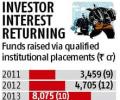
The return of investor confidence in the equity markets is bringing some of the large companies back to the fund-raising table.

Shares of small-cap companies have been on a roll with the S&P BSE Small-Cap index hitting a new high in intra-day deals on Thursday. The rally has been fueled by an up move in stocks of chemicals, cement, graphite electrode makers, pharmaceuticals and information technology (IT) shares. In the past two weeks, since March 25, the index has outperformed the market by gaining 7.3 per cent. In comparison, the S&P BSE Midcap index was up 6.1 per cent, while the S&P BSE Sensex gained 3.6 per cent during the same period.

Fuelled by the $57.8-billion merger of HDFC twins (HDFC Ltd and HDFC Bank), M&A (merger and acquisition) transactions in India touched a record high of $124.2 billion in the first half of 2022-23. Bankers said with several transactions, including the government's stake sale in IDBI Bank and Hindustan Zinc in the pipeline, the ongoing financial year will end up as the best year for M&A activity in the country. Apart from the HDFC transaction, the $6.5-billion acquisition of Holcim stake by the Adani family and L&T's $3.2-billion acquisition of Mindtree added to the record transactions in the first half of FY23.

Around 75 per cent, or 372 stocks, that are part of the BSE500 are trading at least 10 per cent below their all-time high levels, despite the index hitting a record high 20,515 points on the BSE in intra-day trade on Wednesday, surpassing its previous high of 20,390 touched in March 12. The index, which accounts for 93 per cent of BSE listed companies' market capitalisation, has gained 8 per cent from its recent low of 18,983, touched on April 19. In comparison, the benchmark S&P BSE Sensex gained 6 per cent over the same period, but is still nearly 4.5 per cent away from its all-time high of 52,517 that it hit on February 16.

The latest circular from BSE that sought to cap the price movement of select scrips, especially the mid-, small-cap segments, traded on the exchange is not without a reason. A quick calendar year-to-date price check on the stocks from the categories put under 'Add-on Price Band Framework' by the BSE reveals a total of 210 stocks have seen their market price more than double. Among individual stocks, SC Agrotech, Adinath Textiles, Waaree Renewable Technologies, Steel Strips Infrastructure, Unistar Multimedia, Texel Industries, Raja Bahadur International and Hindustan Everest Tools from the BSE's X and XT group have rallied over 500 per cent during this period. Topping the charts is Gita Renewable Energy, which has zoomed 3,964 per cent to Rs 272.35 now from Rs 6.7 as on December 31, 2020.


'In equities, it has diversified portfolios.' 'So the short-term movement of individual stocks does not impact them.'

Bank of India, Canara Bank, Dena Bank, Corporation Bank and Andhra Bank are among the lenders that received capital infusion from the government.

So far in September, the S&P BSE Small-cap index has gained nearly 3 per cent as compared to a modest 0.2 per cent dip in the S&P BSE Sensex.

'Most Indian logistics firms do not have the facility to store and transport COVID-19 vaccine right now.'

Stocks of public sector companies, especially the oil refining and marketing companies (OMCs) - Bharat Petroleum Corporation Limited (BPCL), Hindustan Petroleum Corporation Limited (HPCL) and Indian Oil Corporation Limited (IOC) - logged gains on Tuesday in a weak market. While the Nifty lost nearly 1 per cent in trade on Tuesday, the Nifty CPSE index - a gauge of performance of central public sector enterprises on the National Stock Exchange (NSE) - gained over 3 per cent in intra-day trade. The rally in PSU stocks comes on the back of the BPCL chairman, Arun Kumar Singh suggesting in the company's annual general meeting (AGM) on Monday that the government intends to complete the divestment process in the OMC by March 2022.

Next set of Q4 FY16 earnings, progress of monsoon along with election poll outcome will dictate market trend this week

Sensex remained volatile through the day.

Financial shares were the top losers.
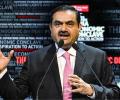
'It's a clear case of political patronage helping an individual grow.'

'I'm pitching India for the strengths we offer, including the English language, engineers, doctors, nurses, professionals, innovative talent of startups.'

Implementation of the Seventh Pay Commission recommendations, One Rank, One Pension are the other triggers going ahead, analysts say

Nifty 50 firms' net profit estimated to grow by a modest 3.1% in Q2, reports Krishna Kant.

Merely bringing down the government stake below 51% may not find any taker for the PSBs. The government must bring down its holding to at least 26%, recommends Tamal Bandyopadhyay.

Mixed global cues and decline in crude oil prices further dent the sentiments.

Capital goods shares continued to trade firm in late noon despite weak market trend on the back of encouraging core sector growth in February.

The government is set to carry out a performance review of companies that have opted for corporate debt restructuring (CDR).

Reports have suggested Rs 400-650 as the possible IPO price

Private equity (PE) is set to play a bigger role in banks. Of 21 recommendations accepted by the Reserve Bank of India (RBI) out of 31 made by its Internal Working Group (IWG), its stance on non-promoter holdings in private banks is seen with excitement, though it doesn't refer to PEs explicitly. On non-promoter holdings in these banks, the RBI said this will be capped at 10 per cent of the paid-up voting equity share capital in the case "of natural persons and non-financial institutions and entities"; and "at 15 per cent for all categories of financial institutions, entities, supranational institutions, public sector undertaking, or the government." While this is a modification of the IWG's stance for the non-promoter holding in banks at up to 15 per cent, it does open up a huge window for PEs, all the same. This is because, while the RBI has remained silent on the eligibility of industrial houses for bank licences, fresh high-quality capital in large amounts can only come from PEs.

Amendment to the Act, sovereign guarantees, investment portfolio, realty holdings, and governance issues to shape valuation.
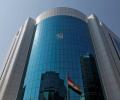
PSBs were required to bring down government shareholding to at least 75 per cent, to comply with the amended Securities Contract (Regulations) Rules by August 2017.

Quite a few large- and mid-cap stocks are yet to recover from the note ban, pharma, banking and rural demand-based industries among laggards.

'Just the amount of work which is there just to become more and more successful in banking. For this to happen you need to have leaders who understand technology.'

'The announcement has come too late. This should have been done years ago.'
With huge liquidity in the money market, partly contributed by capital flows, the interest rates are expected to soften in the short term, according to Industrial Development Bank of India chairman V P Shetty.

The rot is is not limited to Chitra Ramkrishna and the yogi, observed Debashis Basu.

Godhwani's exit comes at a time when the company's fund raising plans and proposed related party transactions are under scrutiny, says N Sundaresha Subramanian.

The S&P BSE Sensex ended up 129 points at 26,843 and the Nifty50 ended up 39 points at 8,220.

To provide exporters/importers greater flexibility in risk management, RBI enhanced the limit available to exporters to 50 per cent

Experts caution that the rally in these stocks may fizzle out soon, as the overall market sentiment still remains weak.

A lot of work is needed to be done on the part of the insurance sector behemoth, and the government, before it is ready for its market debut.
